


Get a complete picture of your health
Our medical experts have carefully selected the most valuable biomarkers to give you the most complete picture of your physical condition and health. With a BioBlue subscription, you gain access to in-depth analyses that test and optimize your health. Learn which biomarkers are included in the test here.

Hormone Balance
These markers regulate mood, libido, energy, and metabolic rate.
Total Testosterone
Primary male sex hormone produced in the testes.
Optimal Range
300 - 1000
Unit
ng/dL
Sample Type
blood (AM)
Role in your body
Supports muscle mass, strength, energy, libido, mood, bone density, and red blood cell production.
Energy & Vitality
Muscle Strength
Libido & Sexual Health
Mood & Focus
Bone & Immune Health
Low levels may be associated with
- Fatigue, low energy
- Reduced libido
- Loss of muscle mass
- Decreased motivation
- Mood changes
High levels may be associated with
- Acne, oily skin
- Irritability, aggression
- Sleep disturbances
Total Testosterone
Primary male sex hormone produced in the testes.
Optimal Range
300 - 1000
Unit
ng/dL
Sample Type
blood (AM)
Role in your body
Supports muscle mass, strength, energy, libido, mood, bone density, and red blood cell production.
Energy & Vitality
Muscle Strength
Libido & Sexual Health
Mood & Focus
Bone & Immune Health
Low levels may be associated with
- Fatigue, low energy
- Reduced libido
- Loss of muscle mass
- Decreased motivation
- Mood changes
High levels may be associated with
- Acne, oily skin
- Irritability, aggression
- Sleep disturbances
Free Testosterone
The active form of testosterone that is not bound to proteins and is available for your body to use.
Optimal Range
5 - 25
Unit
ng/dL
Sample Type
blood (AM)
Role in your body
Plays a key role in libido, erectile function, mood and muscle maintenance. It is bioavailable hormone that drives the effects of testosterone.
Libido & Sexual Function
Energy & Motivation
Muscle Performance
Mood & Well-being
Bone & Metabolic Health
Low levels may be associated with
- Low libido
- Fatigue, low energy
- Depressed mood
- Erectile dysfunction
- Loss of muscle mass
High levels may be associated with
- Acne, oily skin
- Irritability, aggression
- Sleep disturbances
Free Testosterone
The active form of testosterone that is not bound to proteins and is available for your body to use.
Optimal Range
5 - 25
Unit
ng/dL
Sample Type
blood (AM)
Role in your body
Plays a key role in libido, erectile function, mood and muscle maintenance. It is bioavailable hormone that drives the effects of testosterone.
Libido & Sexual Function
Energy & Motivation
Muscle Performance
Mood & Well-being
Bone & Metabolic Health
Low levels may be associated with
- Low libido
- Fatigue, low energy
- Depressed mood
- Erectile dysfunction
- Loss of muscle mass
High levels may be associated with
- Acne, oily skin
- Irritability, aggression
- Sleep disturbances
Progesterone
Primary female reproductive hormone that regulates menstrual cycle, pregnancy, and hormonal balance.
Optimal Range Female
(luteal phase): 5 – 20
(follicular phase): 0.1 – 1.5
Unit
ng/mL
Sample Type
blood (AM)
Optimal Range Male
0.1 – 1.0
Unit
ng/mL
Sample Type
blood (AM)
Role in your body
Regulates menstrual cycle and ovulation, supports pregnancy and implantation, balances estrogen effects, affects mood and sleep quality.
Female cycle
Pregnancy supports
Estrogen balance
Mood affects
Sleep quality
Low levels may be associated with
- Irregular or absent periods
- Difficulty conceiving
- PMS symptoms
- Anxiety or irritability
- Sleep disturbances
High levels may be associated with
- Fatigue or drowsiness
- Bloating
- Mood changes
- Breast tenderness
- Dizziness
Progesterone
Primary female reproductive hormone that regulates menstrual cycle, pregnancy, and hormonal balance.
Optimal Range Female
(luteal phase): 5 – 20
(follicular phase): 0.1 – 1.5
Unit
ng/mL
Sample Type
blood (AM)
Optimal Range Male
0.1 – 1.0
Unit
ng/mL
Sample Type
blood (AM)
Role in your body
Regulates menstrual cycle and ovulation, supports pregnancy and implantation, balances estrogen effects, affects mood and sleep quality.
Female cycle
Pregnancy supports
Estrogen balance
Mood affects
Sleep quality
Low levels may be associated with
- Irregular or absent periods
- Difficulty conceiving
- PMS symptoms
- Anxiety or irritability
- Sleep disturbances
High levels may be associated with
- Fatigue or drowsiness
- Bloating
- Mood changes
- Breast tenderness
- Dizziness
Estrogen (Estradiol E2)
Primary and most biologically active form of estrogen responsible for reproductive and hormonal balance.
Optimal Range Female
(luteal phase): 70 – 250
(follicular phase): 30 – 120
Unit
pg/mL
Sample Type
blood (AM)
Optimal Range Male
10 – 40
Unit
pg/mL
Sample Type
blood (AM)
Role in your body
In women, it regulates the menstrual cycle, supports reproductive health, and affects mood, skin, and bone density.
Reproductive health
Mood & cognition
Skin health
Bone density
Hormonal balance
Low levels may be associated with
- Irregular or missed periods
- Low libido
- Mood swings or depression
- Dry skin
- Bone loss
High levels may be associated with
- Bloating
- Breast tenderness
- Mood swings
- Weight gain
- Headaches
Estrogen (Estradiol E2)
Primary and most biologically active form of estrogen responsible for reproductive and hormonal balance.
Optimal Range Female
(luteal phase): 70 – 250
(follicular phase): 30 – 120
Unit
pg/mL
Sample Type
blood (AM)
Optimal Range Male
10 – 40
Unit
pg/mL
Sample Type
blood (AM)
Role in your body
In women, it regulates the menstrual cycle, supports reproductive health, and affects mood, skin, and bone density.
Reproductive health
Mood & cognition
Skin health
Bone density
Hormonal balance
Low levels may be associated with
- Irregular or missed periods
- Low libido
- Mood swings or depression
- Dry skin
- Bone loss
High levels may be associated with
- Bloating
- Breast tenderness
- Mood swings
- Weight gain
- Headaches
SHBG (Sex Hormone Binding Globulin)
Protein that binds sex hormones (testosterone and estrogen) and regulates their availability in the body.
Optimal Range Female
18 – 144
Unit
nmol/L
Sample Type
blood (AM)
Optimal Range Male
10 – 57
Unit
nmol/L
Sample Type
blood (AM)
Role in your body
Controls how much testosterone and estrogen are available for your body to use.
Regulates free testosterone levels
Binds excess sex hormones
Maintains hormonal balance
Influences metabolism
Low levels may be associated with
- High free testosterone
- Acne or oily skin
- Insulin resistance
- Weight gain
- PCOS (in women)
High levels may be associated with
- Low free testosterone
- Fatigue
- Low libido
- Reduced muscle mass
- Hormonal imbalance
SHBG (Sex Hormone Binding Globulin)
Protein that binds sex hormones (testosterone and estrogen) and regulates their availability in the body.
Optimal Range Female
18 – 144
Unit
nmol/L
Sample Type
blood (AM)
Optimal Range Male
10 – 57
Unit
nmol/L
Sample Type
blood (AM)
Role in your body
Controls how much testosterone and estrogen are available for your body to use.
Regulates free testosterone levels
Binds excess sex hormones
Maintains hormonal balance
Influences metabolism
Low levels may be associated with
- High free testosterone
- Acne or oily skin
- Insulin resistance
- Weight gain
- PCOS (in women)
High levels may be associated with
- Low free testosterone
- Fatigue
- Low libido
- Reduced muscle mass
- Hormonal imbalance
TSH (Thyroid Stimulating Hormone)
Hormone that regulates thyroid function and controls metabolism, energy levels, and overall health.
Optimal Range Adult
0.4 – 4.0
Unit
mIU/L
Sample Type
blood (AM)
Role in your body
Signals the thyroid gland to produce hormones that regulate metabolism and energy.
Influences weight and mood
Regulates energy levels
Supports body temperature balance
Controls metabolism
Low levels may be associated with
- Hyperthyroidism
- Anxiety or irritability
- Rapid heartbeat
- Weight loss
- Heat intolerance
High levels may be associated with
- Hypothyroidism
- Fatigue
- Weight gain
- Depression
- Cold intolerance
TSH (Thyroid Stimulating Hormone)
Hormone that regulates thyroid function and controls metabolism, energy levels, and overall health.
Optimal Range Adult
0.4 – 4.0
Unit
mIU/L
Sample Type
blood (AM)
Role in your body
Signals the thyroid gland to produce hormones that regulate metabolism and energy.
Influences weight and mood
Regulates energy levels
Supports body temperature balance
Controls metabolism
Low levels may be associated with
- Hyperthyroidism
- Anxiety or irritability
- Rapid heartbeat
- Weight loss
- Heat intolerance
High levels may be associated with
- Hypothyroidism
- Fatigue
- Weight gain
- Depression
- Cold intolerance
Free T4 (Free Thyroxine)
The unbound, active form of thyroxine available for your body to use. It plays a central role in regulating metabolic rate and overall physiological activity.
Optimal Range Adult
0.8 – 1.8
Unit
ng/dL
Sample Type
blood (AM)
Role in your body
Free T4 is essential for controlling metabolism, energy production, and temperature regulation. It supports brain function, cardiovascular health, and overall hormonal balance.
Weight & metabolic balance
Energy & stamina
Body temperature control
Metabolism regulation
Cognitive function
Low levels may be associated with
- Fatigue and low energy
- Weight gain
- Depression or low mood
- Slow heart rate
- Cold intolerance
High levels may be associated with
- Anxiety and irritability
- Unintentional weight loss
- Rapid heartbeat (palpitations)
- Excess sweating
- Sleep disturbances
Free T4 (Free Thyroxine)
The unbound, active form of thyroxine available for your body to use. It plays a central role in regulating metabolic rate and overall physiological activity.
Optimal Range Adult
0.8 – 1.8
Unit
ng/dL
Sample Type
blood (AM)
Role in your body
Free T4 is essential for controlling metabolism, energy production, and temperature regulation. It supports brain function, cardiovascular health, and overall hormonal balance.
Weight & metabolic balance
Energy & stamina
Body temperature control
Metabolism regulation
Cognitive function
Low levels may be associated with
- Fatigue and low energy
- Weight gain
- Depression or low mood
- Slow heart rate
- Cold intolerance
High levels may be associated with
- Anxiety and irritability
- Unintentional weight loss
- Rapid heartbeat (palpitations)
- Excess sweating
- Sleep disturbances
Heart Health
These markers gauge cardiovascular risk.
High-sensitivity CRP (hs-CRP)
A sensitive blood marker of systemic inflammation that reflects cardiovascular risk by measuring low levels of C-reactive protein produced by the liver in response to inflammation.
Optimal Range Adult
Low risk: < 1.0
Moderate risk: 1.0 – 3.0
High risk: > 3.0
Unit
mg/L
Sample Type
blood (AM)
Role in your body
Hs-CRP is a marker of inflammation in the body. It helps assess cardiovascular disease risk and can indicate the presence of chronic or acute inflammatory processes.
Cardiovascular risk indicator
Inflammation detection
Immune activation marker
Metabolic correlation
Tissue stress indicator
Low levels may be associated with
- Very low cardiovascular risk
- Healthy metabolic and immune balance
- Minimal systemic inflammation
- Lower risk of chronic inflammatory conditions
- Tissue injury or physical stress
High levels may be associated with
- Increased cardiovascular risk
- Chronic systemic inflammation
- Acute infection or immune response
- Tissue injury or physical stress
- Metabolic syndrome or obesity-related inflammation
High-sensitivity CRP (hs-CRP)
A sensitive blood marker of systemic inflammation that reflects cardiovascular risk by measuring low levels of C-reactive protein produced by the liver in response to inflammation.
Optimal Range Adult
Low risk: < 1.0
Moderate risk: 1.0 – 3.0
High risk: > 3.0
Unit
mg/L
Sample Type
blood (AM)
Role in your body
Hs-CRP is a marker of inflammation in the body. It helps assess cardiovascular disease risk and can indicate the presence of chronic or acute inflammatory processes.
Cardiovascular risk indicator
Inflammation detection
Immune activation marker
Metabolic correlation
Tissue stress indicator
Low levels may be associated with
- Very low cardiovascular risk
- Healthy metabolic and immune balance
- Minimal systemic inflammation
- Lower risk of chronic inflammatory conditions
- Tissue injury or physical stress
High levels may be associated with
- Increased cardiovascular risk
- Chronic systemic inflammation
- Acute infection or immune response
- Tissue injury or physical stress
- Metabolic syndrome or obesity-related inflammation
Total Cholesterol
A blood lipid marker that reflects the total amount of cholesterol in circulation, including LDL and HDL fractions. It is used to assess cardiovascular and metabolic health.
Optimal Range
< 200
Unit
mg/dL
Sample Type
blood (AM)
Role in your body
Total cholesterol is essential for cell membrane structure, hormone production, and bile acid synthesis.
Supports hormone production
Cell membrane integrity
Vit D & bile acid synthesis
Overall lipid metabolism
Low levels may be associated with
- Hormonal imbalance
- Malnutrition or low-fat intake
- Liver dysfunction
- Fatigue or low energy
- Impaired hormone synthesis
High levels may be associated with
- Increased cardiovascular disease risk
- Atherosclerosis (plaque buildup in arteries)
- Poor lipid metabolism
- Obesity or metabolic syndrome
- Unhealthy diet high in saturated fats
Total Cholesterol
A blood lipid marker that reflects the total amount of cholesterol in circulation, including LDL and HDL fractions. It is used to assess cardiovascular and metabolic health.
Optimal Range
< 200
Unit
mg/dL
Sample Type
blood (AM)
Role in your body
Total cholesterol is essential for cell membrane structure, hormone production, and bile acid synthesis.
Supports hormone production
Cell membrane integrity
Vit D & bile acid synthesis
Overall lipid metabolism
Low levels may be associated with
- Hormonal imbalance
- Malnutrition or low-fat intake
- Liver dysfunction
- Fatigue or low energy
- Impaired hormone synthesis
High levels may be associated with
- Increased cardiovascular disease risk
- Atherosclerosis (plaque buildup in arteries)
- Poor lipid metabolism
- Obesity or metabolic syndrome
- Unhealthy diet high in saturated fats
LDL Cholesterol (Low-Density Lipoprotein)
A blood lipid marker often referred to as "bad cholesterol," reflecting the amount of cholesterol carried by LDL particles in the bloodstream. It is a key indicator of cardiovascular risk.
Optimal Range
< 100
Unit
mg/dL
Sample Type
blood (AM)
Role in your body
LDL cholesterol transports cholesterol from the liver to cells, where it supports cell membrane structure and hormone production. When present in excess, it can accumulate in blood vessel walls and contribute to plaque formation.
Cholesterol delivery to cells
Cell membrane structure
Hormone production
Normal cellular repair processes
Low levels may be associated with
- Hormonal imbalance
- Malnutrition or very low-fat diet
- Liver dysfunction
- Chronic illness or inflammation
- Fatigue or reduced energy levels
High levels may be associated with
- Increased risk of cardiovascular disease
- Atherosclerosis (plaque buildup in arteries)
- Metabolic syndrome and obesity
- Diet high in saturated and trans fats
- Chronic inflammation or metabolic dysfunction
LDL Cholesterol (Low-Density Lipoprotein)
A blood lipid marker often referred to as "bad cholesterol," reflecting the amount of cholesterol carried by LDL particles in the bloodstream. It is a key indicator of cardiovascular risk.
Optimal Range
< 100
Unit
mg/dL
Sample Type
blood (AM)
Role in your body
LDL cholesterol transports cholesterol from the liver to cells, where it supports cell membrane structure and hormone production. When present in excess, it can accumulate in blood vessel walls and contribute to plaque formation.
Cholesterol delivery to cells
Cell membrane structure
Hormone production
Normal cellular repair processes
Low levels may be associated with
- Hormonal imbalance
- Malnutrition or very low-fat diet
- Liver dysfunction
- Chronic illness or inflammation
- Fatigue or reduced energy levels
High levels may be associated with
- Increased risk of cardiovascular disease
- Atherosclerosis (plaque buildup in arteries)
- Metabolic syndrome and obesity
- Diet high in saturated and trans fats
- Chronic inflammation or metabolic dysfunction
HDL Cholesterol (High-Density Lipoprotein)
A blood lipid marker often referred to as "good cholesterol," reflecting the amount of cholesterol carried by HDL particles. It helps remove excess cholesterol from the bloodstream and transport it to the liver for elimination.
Optimal Range
60 (protective)
Unit
mg/dL
Sample Type
blood (AM)
Role in your body
HDL cholesterol plays a protective role by clearing excess cholesterol from arteries and supporting cardiovascular health.
Removal of excess cholesterol
Cardiovascular protection
Anti-inflammatory and antioxidant activity
Healthy lipid balance
Reduced arterial plaque
Low levels may be associated with
- Increased risk of cardiovascular disease
- Atherosclerosis (plaque buildup in arteries)
- Sedentary lifestyle
- Obesity or metabolic syndrome
- Smoking
- Poor diet (low in healthy fats)
High levels may be associated with
- Lower risk of cardiovascular disease
- Efficient cholesterol clearance
- Regular physical activity
- Healthy fat intake (e.g., omega-3)
- Better metabolic health
HDL Cholesterol (High-Density Lipoprotein)
A blood lipid marker often referred to as "good cholesterol," reflecting the amount of cholesterol carried by HDL particles. It helps remove excess cholesterol from the bloodstream and transport it to the liver for elimination.
Optimal Range
60 (protective)
Unit
mg/dL
Sample Type
blood (AM)
Role in your body
HDL cholesterol plays a protective role by clearing excess cholesterol from arteries and supporting cardiovascular health.
Removal of excess cholesterol
Cardiovascular protection
Anti-inflammatory and antioxidant activity
Healthy lipid balance
Reduced arterial plaque
Low levels may be associated with
- Increased risk of cardiovascular disease
- Atherosclerosis (plaque buildup in arteries)
- Sedentary lifestyle
- Obesity or metabolic syndrome
- Smoking
- Poor diet (low in healthy fats)
High levels may be associated with
- Lower risk of cardiovascular disease
- Efficient cholesterol clearance
- Regular physical activity
- Healthy fat intake (e.g., omega-3)
- Better metabolic health
Metabolism Efficiency
These track nutrient status and fuel handling.
Hemoglobin A1c (HbA1c)
A blood biomarker that reflects the average blood glucose level over the past 2–3 months by measuring the percentage of glycated hemoglobin. It is widely used to assess long-term glucose control and diabetes risk.
Optimal Range
< 5.7% (normal)
Unit
%
Sample Type
blood (AM)
Role in your body
HbA1c forms when glucose binds to hemoglobin in red blood cells. Its level reflects how much glucose has been circulating in the bloodstream over time.
Tracks long-term glucose levels
Reflects overall metabolic health
Helps detect prediabetes and diabetes
Measures treatment effectiveness
Low levels may be associated with
- Frequent hypoglycemia (low blood sugar)
- Overly aggressive glucose-lowering treatment
- Chronic liver disease
- Certain blood disorders (e.g., anemia)
- Poor nutrient intake
High levels may be associated with
- Prediabetes or diabetes
- Insulin resistance
- Increased risk of cardiovascular disease
- Poor glucose control
- Metabolic syndrome
Hemoglobin A1c (HbA1c)
A blood biomarker that reflects the average blood glucose level over the past 2–3 months by measuring the percentage of glycated hemoglobin. It is widely used to assess long-term glucose control and diabetes risk.
Optimal Range
< 5.7% (normal)
Unit
%
Sample Type
blood (AM)
Role in your body
HbA1c forms when glucose binds to hemoglobin in red blood cells. Its level reflects how much glucose has been circulating in the bloodstream over time.
Tracks long-term glucose levels
Reflects overall metabolic health
Helps detect prediabetes and diabetes
Measures treatment effectiveness
Low levels may be associated with
- Frequent hypoglycemia (low blood sugar)
- Overly aggressive glucose-lowering treatment
- Chronic liver disease
- Certain blood disorders (e.g., anemia)
- Poor nutrient intake
High levels may be associated with
- Prediabetes or diabetes
- Insulin resistance
- Increased risk of cardiovascular disease
- Poor glucose control
- Metabolic syndrome
Albumin
The main plasma protein produced by the liver, essential for maintaining oncotic pressure, transporting molecules, and reflecting overall metabolic and nutritional status.
Optimal Range (Adults)
35 – 50
Unit
g/L
Sample Type
blood (AM)
Role in your body
Albumin is responsible for maintaining fluid balance between blood vessels and tissues, transporting hormones, vitamins, fatty acids, and drugs, and serving as a key indicator of liver synthetic function and protein metabolism.
Metabolism & nutritional status
Liver function
Fluid balance regulation
Transport of hormones & nutrients
Systemic inflammation indicator
Low levels may be associated with
- Malnutrition or low protein intake
- Chronic liver disease (e.g., cirrhosis)
- Kidney disease (protein loss in urine)
- Chronic inflammation or infection
- Edema (fluid accumulation in tissues)
- Advanced illness or catabolic states
High levels may be associated with
- Dehydration
- Hemoconcentration
- Acute fluid loss
Albumin
The main plasma protein produced by the liver, essential for maintaining oncotic pressure, transporting molecules, and reflecting overall metabolic and nutritional status.
Optimal Range (Adults)
35 – 50
Unit
g/L
Sample Type
blood (AM)
Role in your body
Albumin is responsible for maintaining fluid balance between blood vessels and tissues, transporting hormones, vitamins, fatty acids, and drugs, and serving as a key indicator of liver synthetic function and protein metabolism.
Metabolism & nutritional status
Liver function
Fluid balance regulation
Transport of hormones & nutrients
Systemic inflammation indicator
Low levels may be associated with
- Malnutrition or low protein intake
- Chronic liver disease (e.g., cirrhosis)
- Kidney disease (protein loss in urine)
- Chronic inflammation or infection
- Edema (fluid accumulation in tissues)
- Advanced illness or catabolic states
High levels may be associated with
- Dehydration
- Hemoconcentration
- Acute fluid loss
Ferritin (Iron)
A blood protein that stores iron and releases it when your body needs it. It reflects your body's iron reserves and is a key marker of iron status and inflammation.
Optimal Range Male
30 – 300
Unit
ng/mL
Sample Type
blood (AM)
Optimal Range Female
15 – 150
Unit
ng/mL
Sample Type
blood (AM)
Role in your body
Ferritin acts as the main storage form of iron, ensuring a stable supply for red blood cell production, oxygen transport, and energy metabolism.
Iron storage & availability
Red blood cell production
Oxygen transport
Energy production
Immune system
Low levels may be associated with
- Iron deficiency
- Fatigue and low energy
- Hair loss
- Pale skin
- Shortness of breath
- Reduced exercise tolerance
High levels may be associated with
- Inflammation or infection
- Liver disease
- Cardiovascular risk
- Chronic fatigue
- Oxidative stress
- Joint pain
Ferritin (Iron)
A blood protein that stores iron and releases it when your body needs it. It reflects your body's iron reserves and is a key marker of iron status and inflammation.
Optimal Range Male
30 – 300
Unit
ng/mL
Sample Type
blood (AM)
Optimal Range Female
15 – 150
Unit
ng/mL
Sample Type
blood (AM)
Role in your body
Ferritin acts as the main storage form of iron, ensuring a stable supply for red blood cell production, oxygen transport, and energy metabolism.
Iron storage & availability
Red blood cell production
Oxygen transport
Energy production
Immune system
Low levels may be associated with
- Iron deficiency
- Fatigue and low energy
- Hair loss
- Pale skin
- Shortness of breath
- Reduced exercise tolerance
High levels may be associated with
- Inflammation or infection
- Liver disease
- Cardiovascular risk
- Chronic fatigue
- Oxidative stress
- Joint pain
Vitamines & Minerals
Tests measuring key for energy, immunity, metabolism, and overall health.
25-Hydroxyvitamin D
The main circulating form of vitamin D in the blood that reflects overall vitamin D status in the body. It is produced in the liver from vitamin D obtained through sunlight, food, or supplements.
Optimal Range
30 – 100
Unit
ng/mL
Sample Type
blood (AM)
Role in your body
25 (OH) D is the primary indicator of vitamin D stores and is essential for bone health, immune regulation, and metabolic function.
Bone & calcium
Immune system
Muscle function
Inflammation control
Hormonal balance
Low levels may be associated with
- Fatigue and low energy
- Bone weakness or osteopenia
- Muscle pain or weakness
- Frequent infections
- Depressed mood
- Increased risk of osteoporosis
High levels may be associated with
- Vitamin D toxicity (hypervitaminosis D)
- Elevated calcium levels (hypercalcemia)
- Nausea or digestive discomfort
- Kidney strain or damage
- Confusion or fatigue
- Excessive supplementation
25-Hydroxyvitamin D
The main circulating form of vitamin D in the blood that reflects overall vitamin D status in the body. It is produced in the liver from vitamin D obtained through sunlight, food, or supplements.
Optimal Range
30 – 100
Unit
ng/mL
Sample Type
blood (AM)
Role in your body
25 (OH) D is the primary indicator of vitamin D stores and is essential for bone health, immune regulation, and metabolic function.
Bone & calcium
Immune system
Muscle function
Inflammation control
Hormonal balance
Low levels may be associated with
- Fatigue and low energy
- Bone weakness or osteopenia
- Muscle pain or weakness
- Frequent infections
- Depressed mood
- Increased risk of osteoporosis
High levels may be associated with
- Vitamin D toxicity (hypervitaminosis D)
- Elevated calcium levels (hypercalcemia)
- Nausea or digestive discomfort
- Kidney strain or damage
- Confusion or fatigue
- Excessive supplementation
Vitamin B12 (Cobalamin)
A water-soluble vitamin essential for red blood cell formation, neurological function, and DNA synthesis. It must be obtained from food or supplements, as the body cannot produce it.
Optimal Range
200 – 900
Unit
pg/mL
Sample Type
blood (AM)
Role in your body
Vitamin B12 is crucial for energy production, nerve function, and healthy blood formation.
Red blood cell production
Nervous system function
DNA synthesis
Energy metabolism
Brain health & cognitive function
Low levels may be associated with
- Fatigue and weakness
- Anemia (megaloblastic anemia)
- Numbness or tingling in hands and feet
- Memory problems or brain fog
- Depressed mood or irritability
- Difficulty concentrating
High levels may be associated with
- Liver disease
- Kidney dysfunction
- Nausea or digestive discomfort
- Blood disorders
- Inflammatory or metabolic conditions
- Rarely, no symptoms
Vitamin B12 (Cobalamin)
A water-soluble vitamin essential for red blood cell formation, neurological function, and DNA synthesis. It must be obtained from food or supplements, as the body cannot produce it.
Optimal Range
200 – 900
Unit
pg/mL
Sample Type
blood (AM)
Role in your body
Vitamin B12 is crucial for energy production, nerve function, and healthy blood formation.
Red blood cell production
Nervous system function
DNA synthesis
Energy metabolism
Brain health & cognitive function
Low levels may be associated with
- Fatigue and weakness
- Anemia (megaloblastic anemia)
- Numbness or tingling in hands and feet
- Memory problems or brain fog
- Depressed mood or irritability
- Difficulty concentrating
High levels may be associated with
- Liver disease
- Kidney dysfunction
- Nausea or digestive discomfort
- Blood disorders
- Inflammatory or metabolic conditions
- Rarely, no symptoms
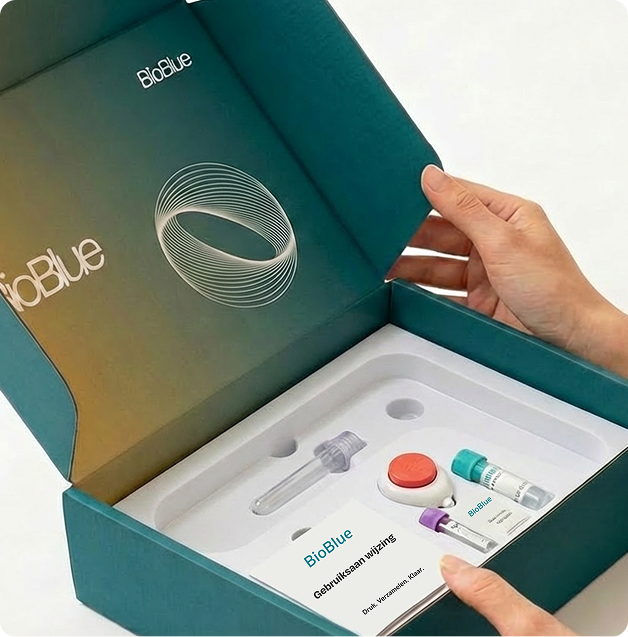


Complete BioBlue health cycle
Each test includes a comprehensive biomarker analysis and personalized health recommendations tailored to your body.
One time purchase
MONTHLY SUBSCRIPTION
Choose your plan
Choose your gender
How we compare
Standard analysis vs personalized BioBlue
FAQs
Can't find the answer to your question here?
PLEASE CONTACT US